inTerface house 。 界宅

inTerface house。 界宅
Core Design Workshop | Kuala Lumpur, Malaysia
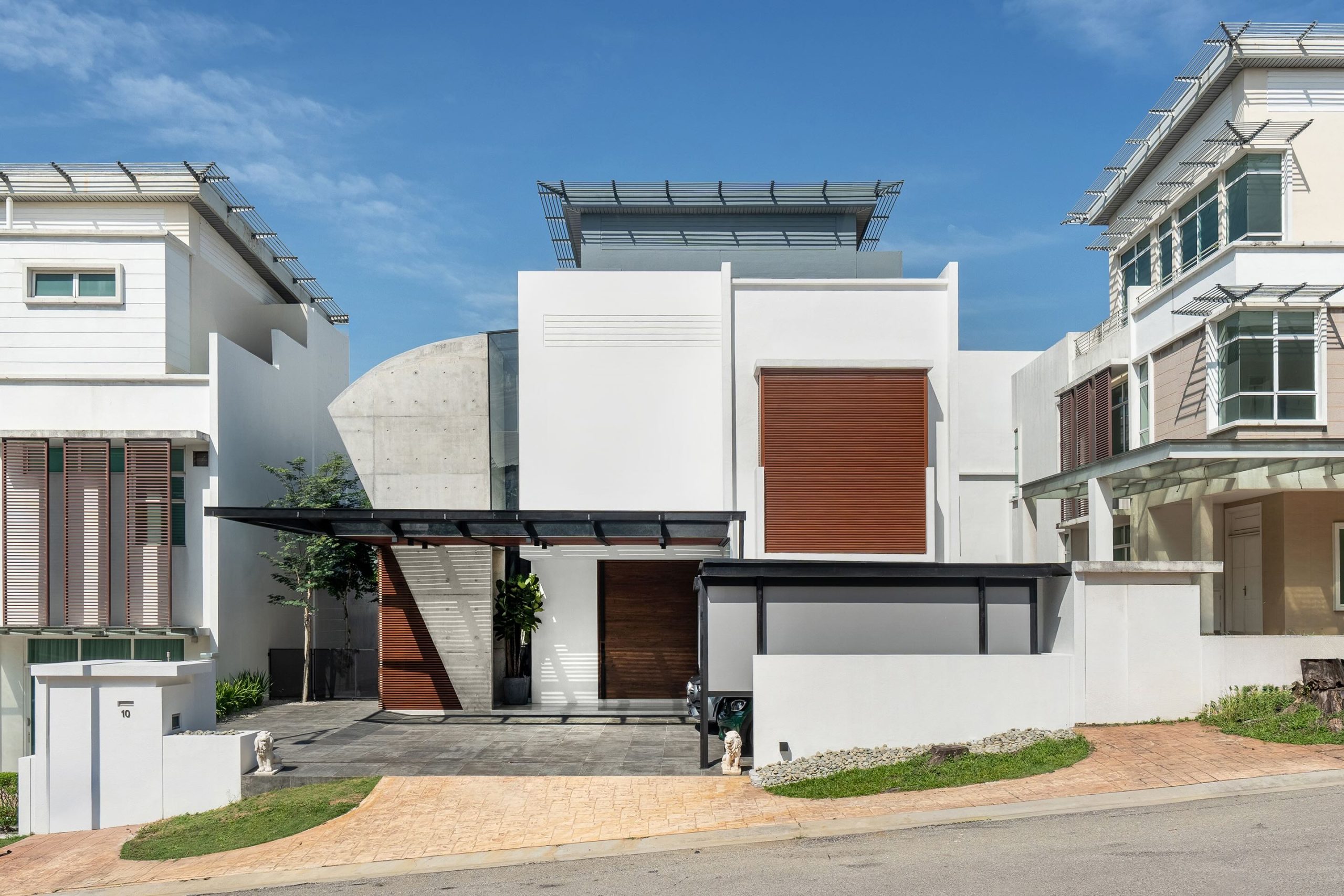
Interface House is a residential renovation in Kuala Lumpur that rethinks outdoor living within the constraints of a developer-built zero-lot bungalow.
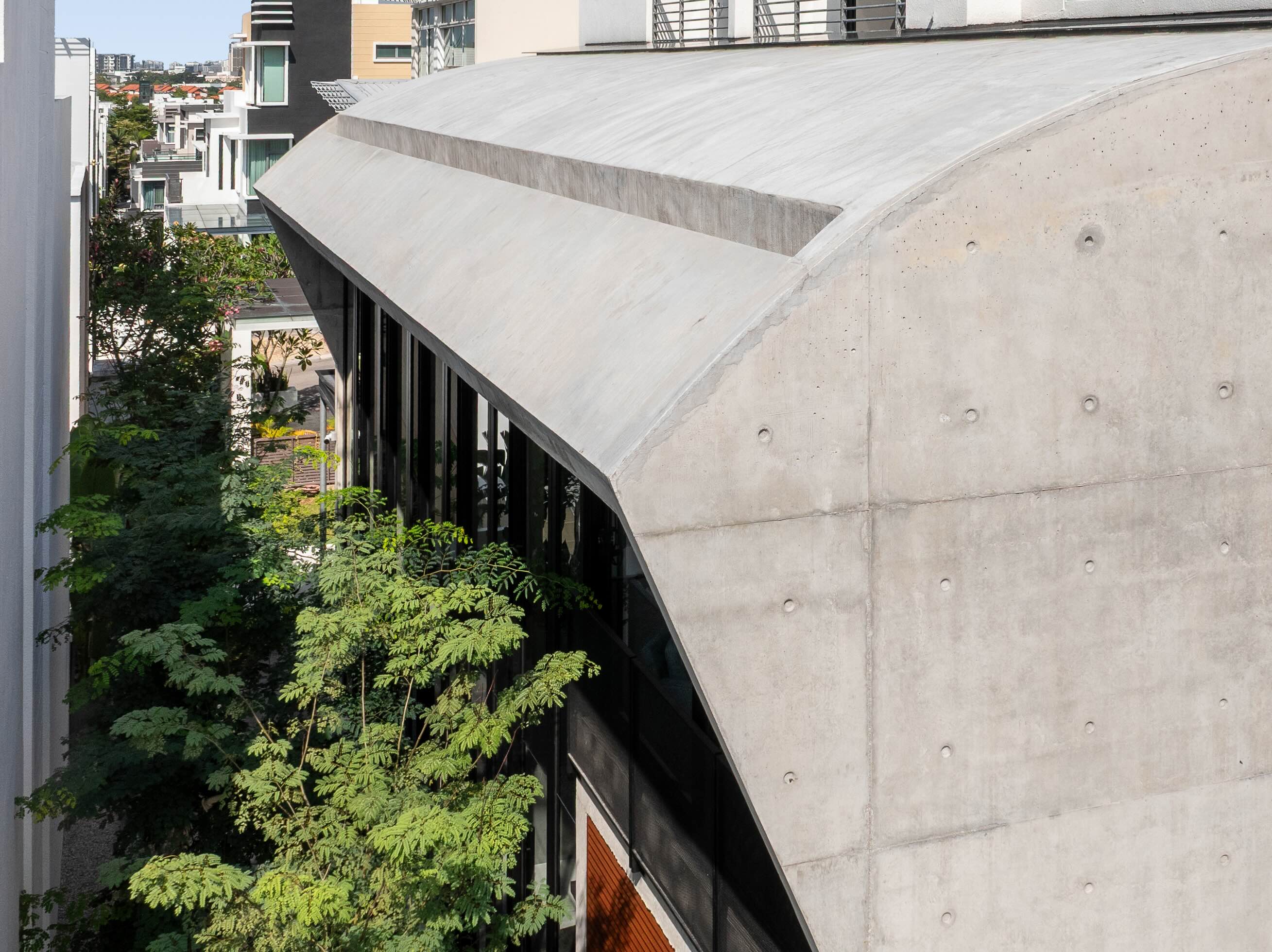
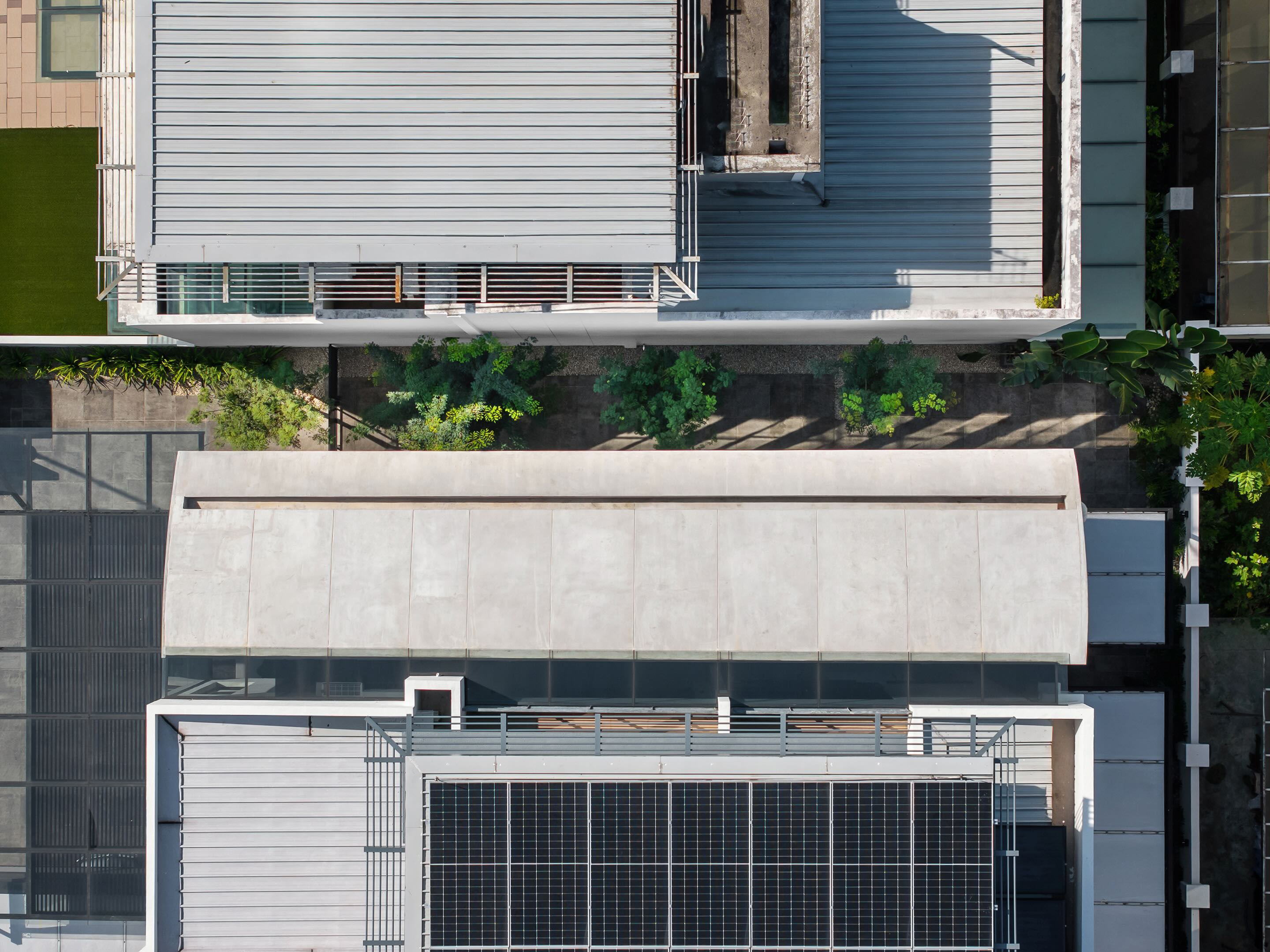
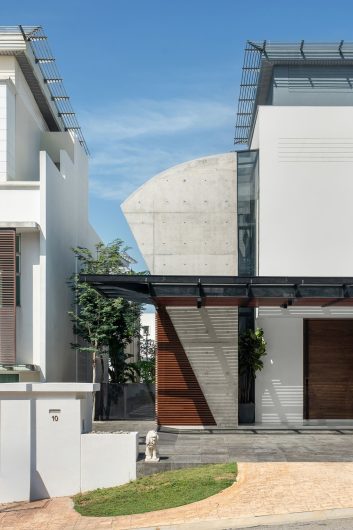
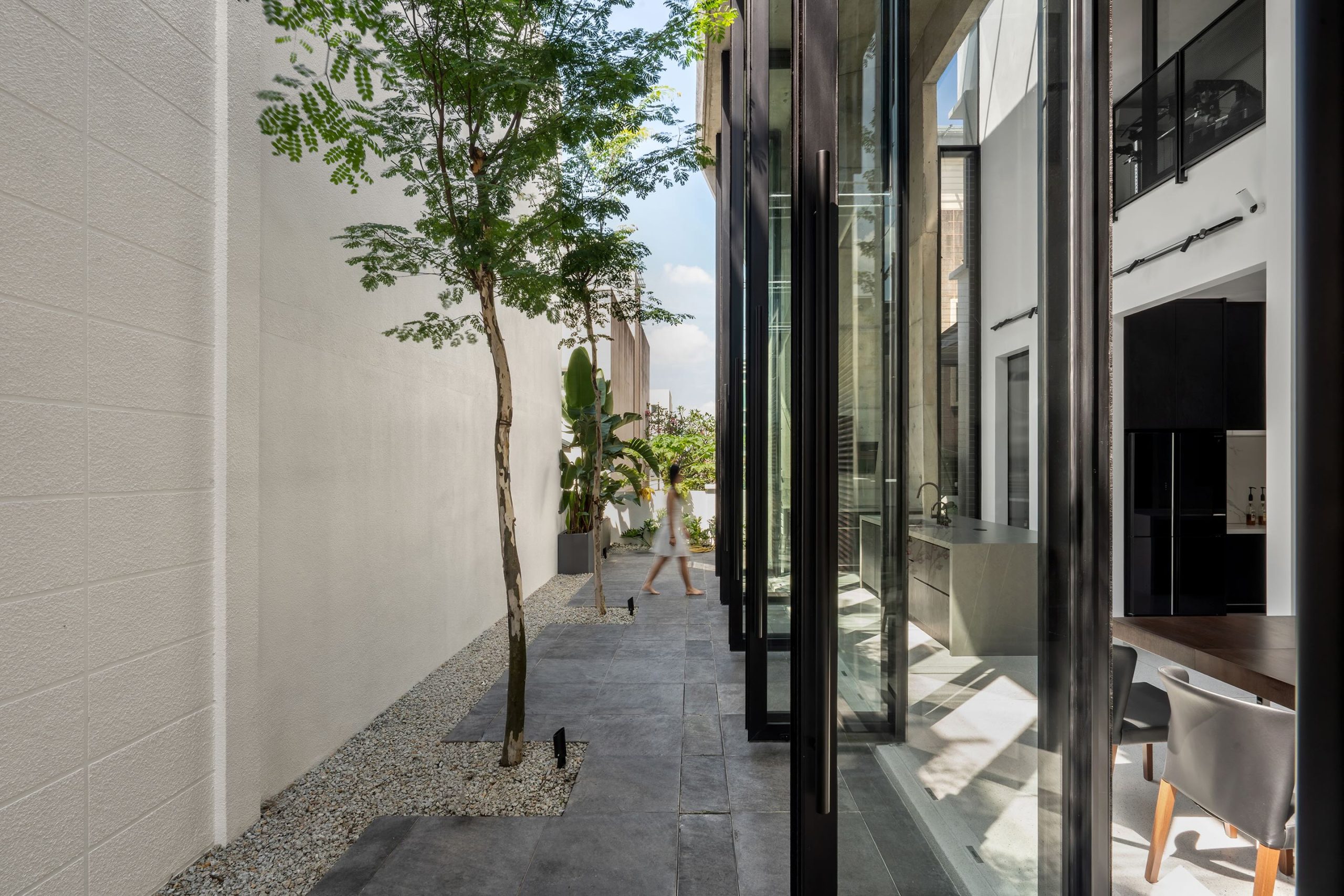
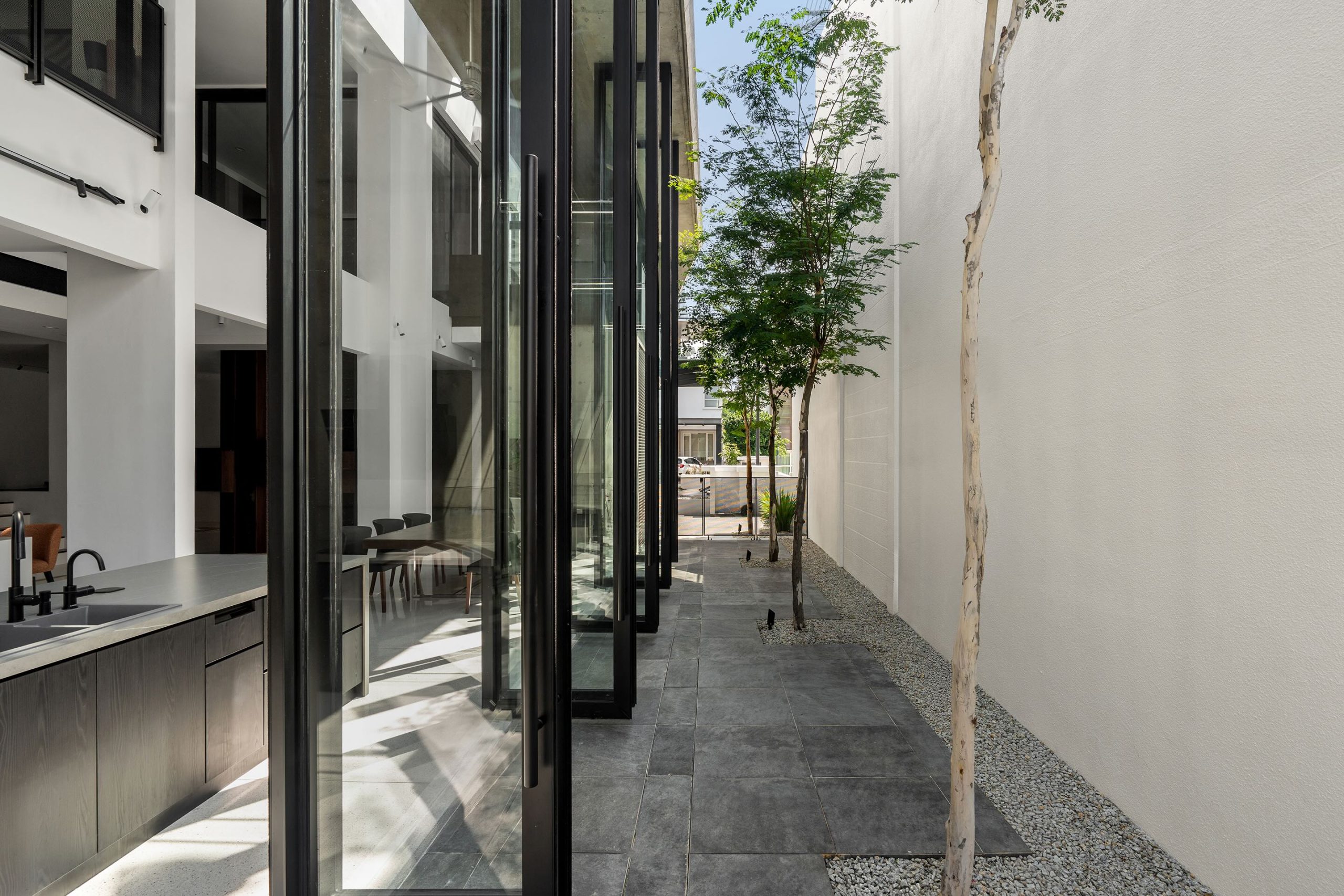
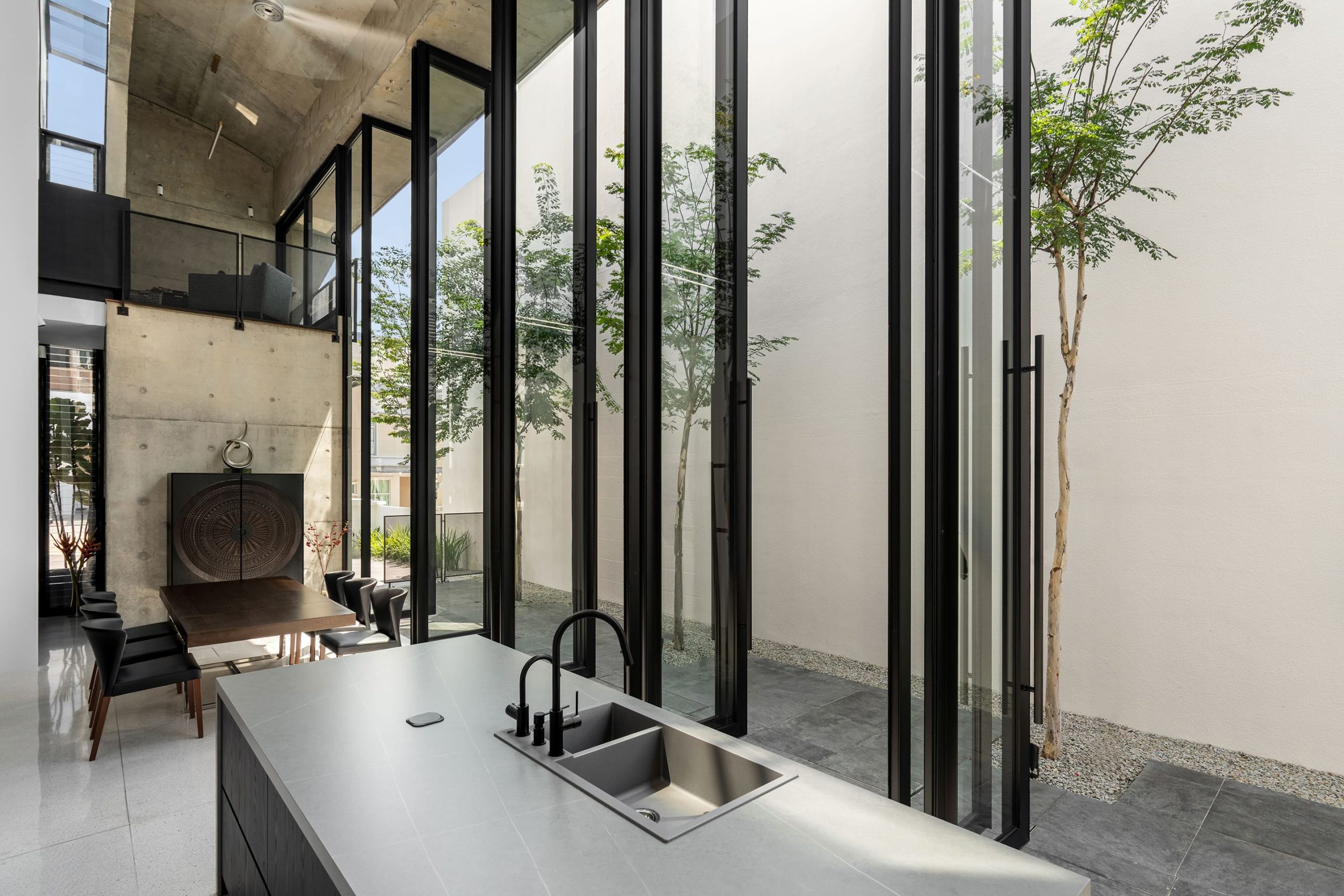
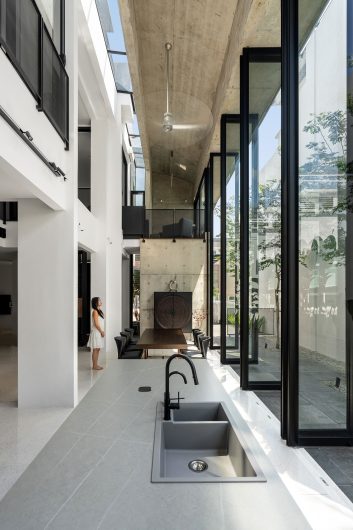
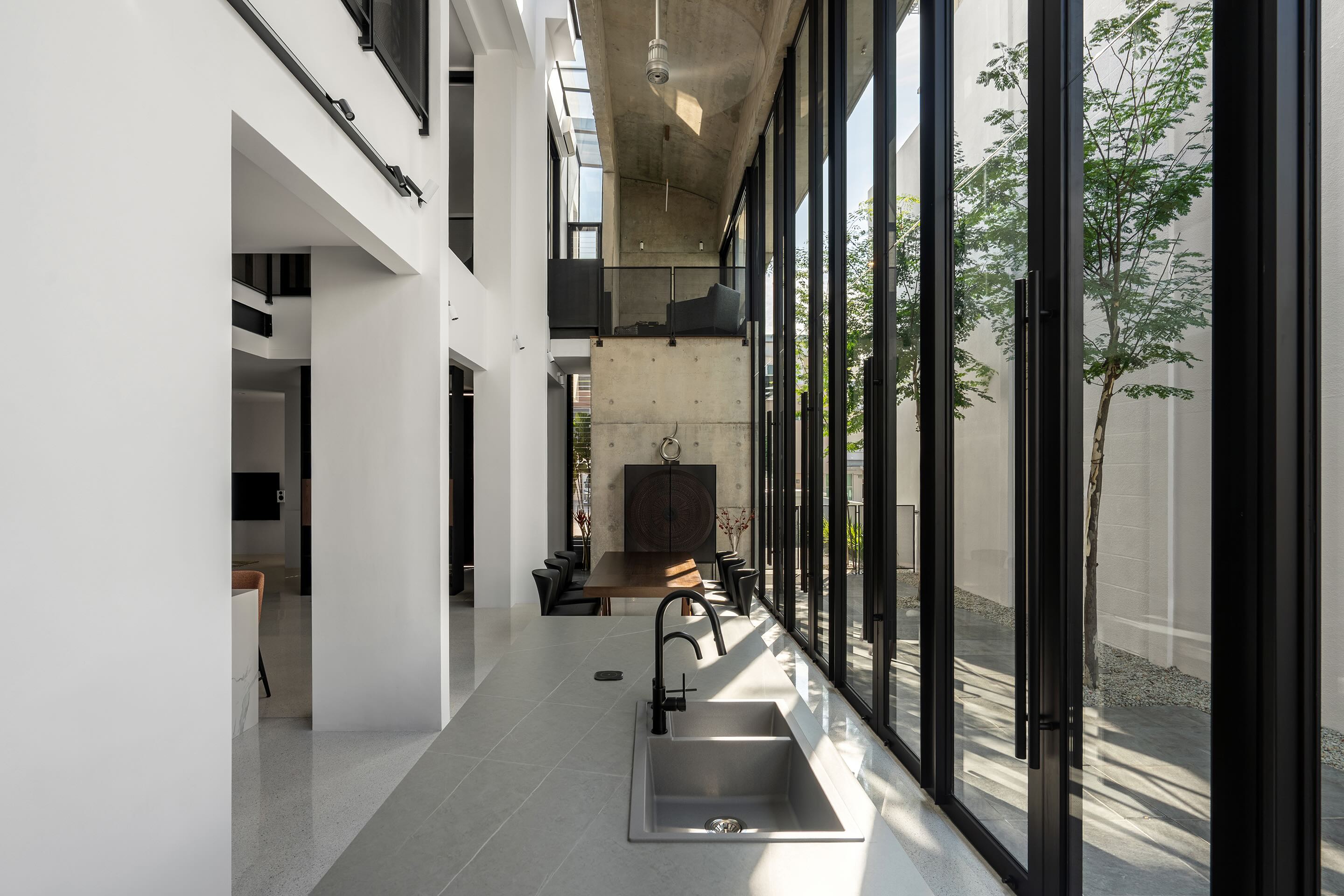
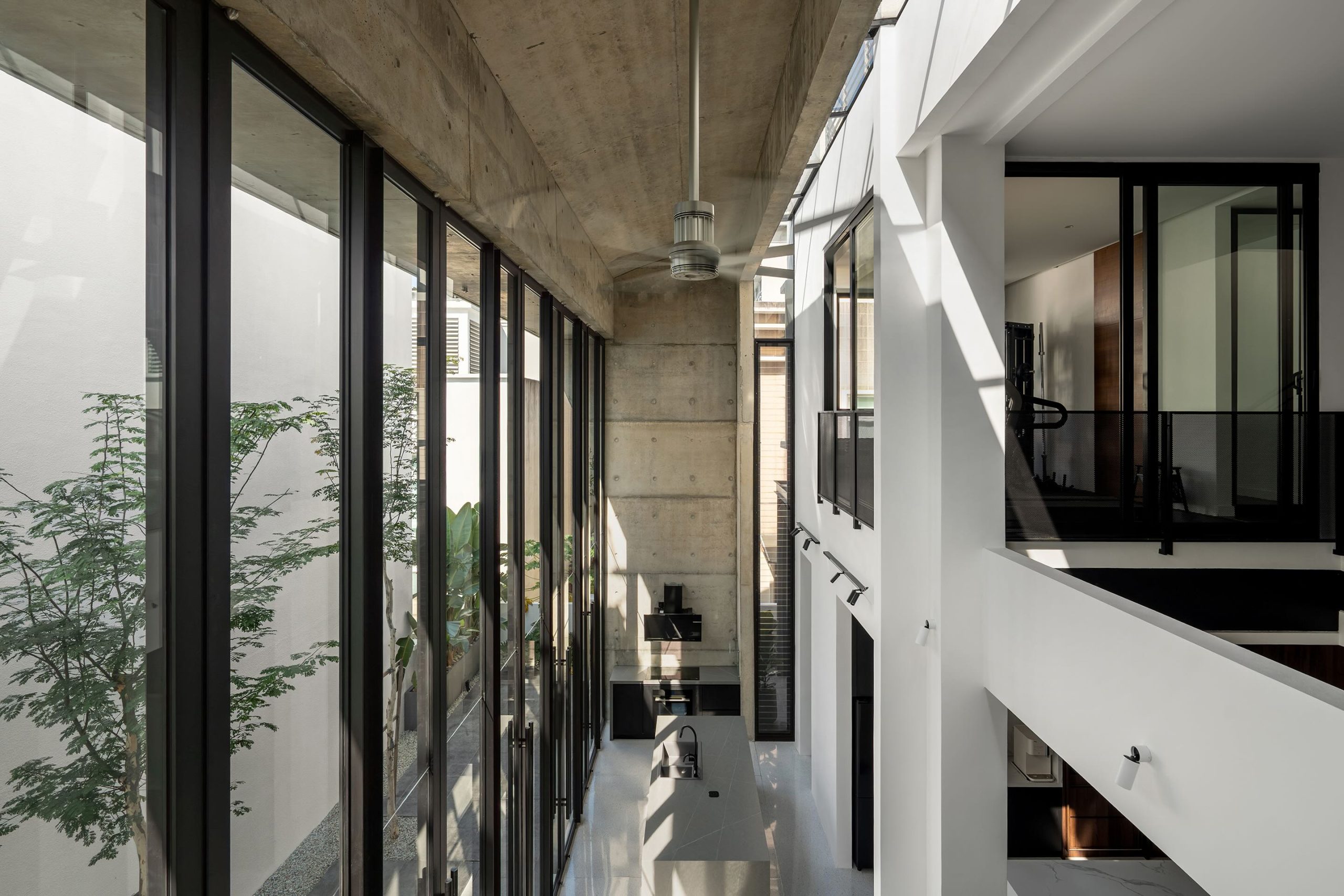
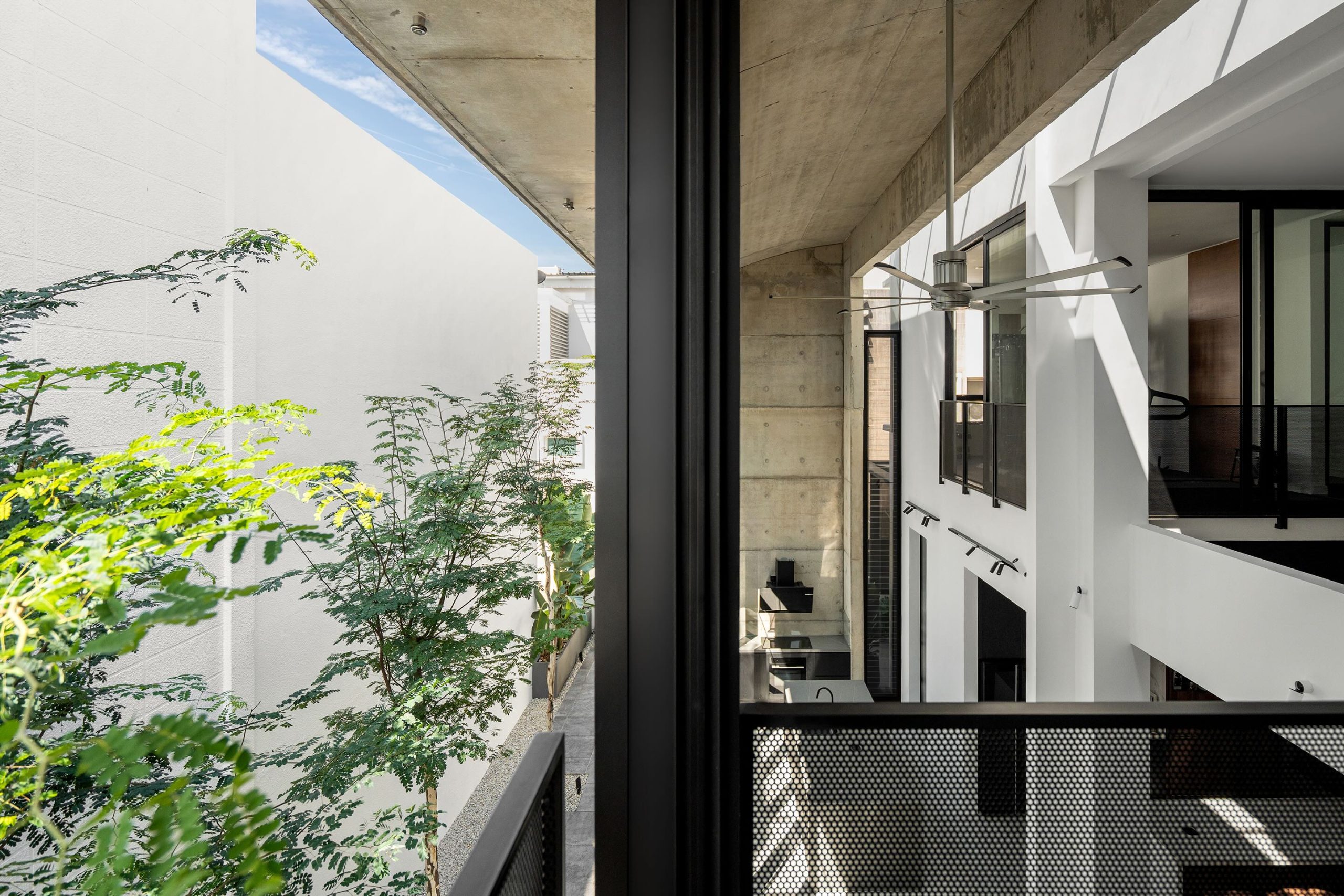
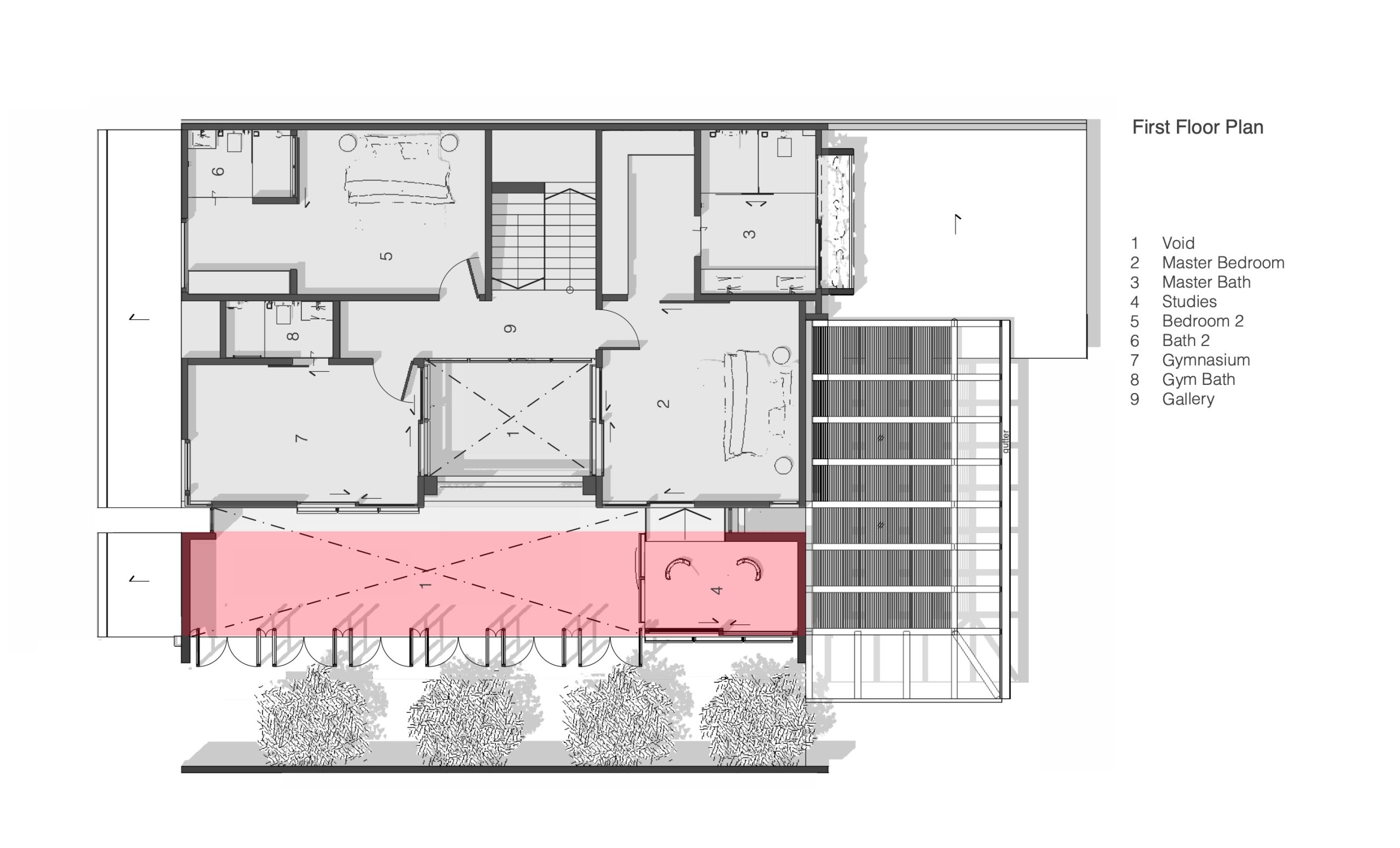
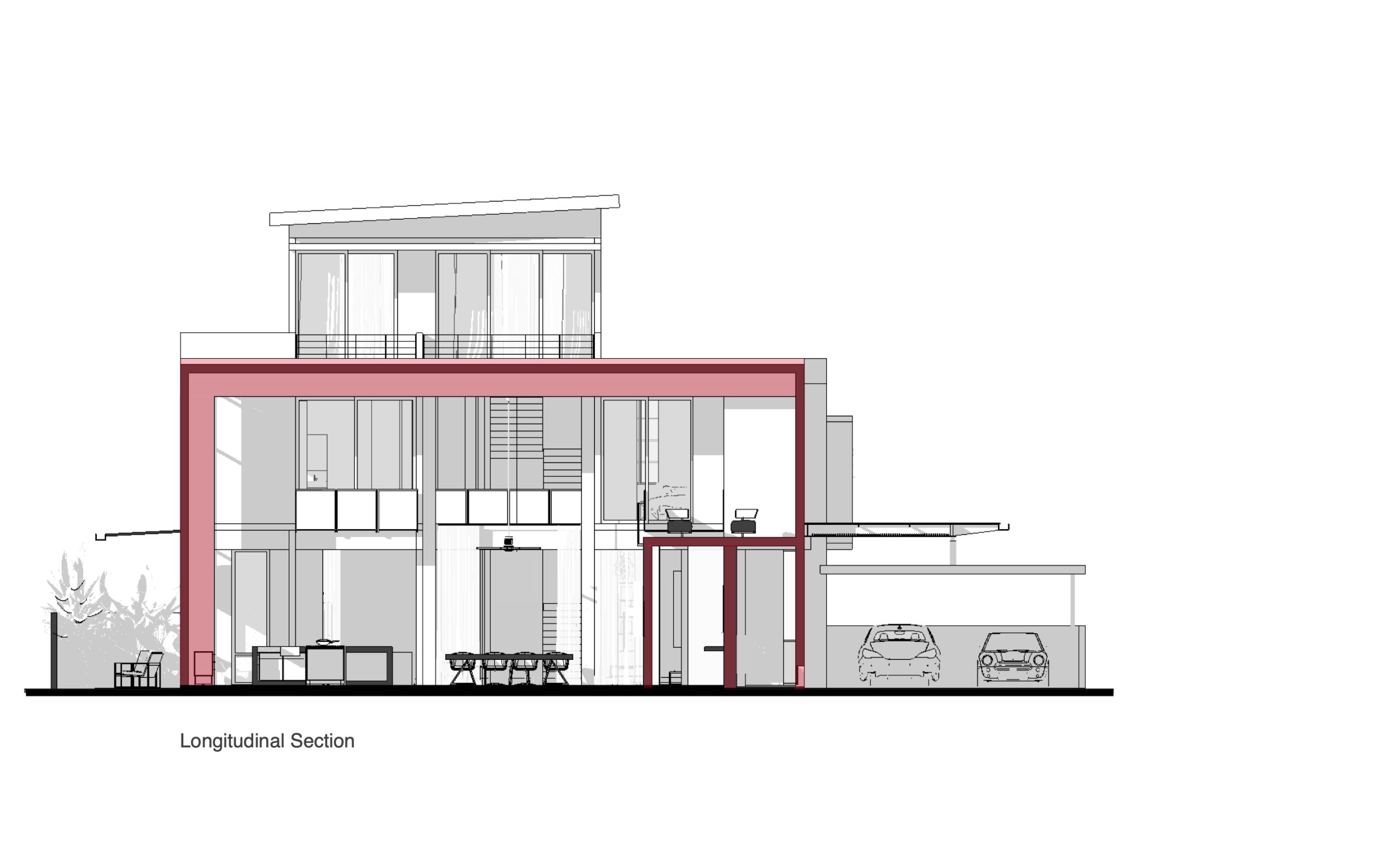
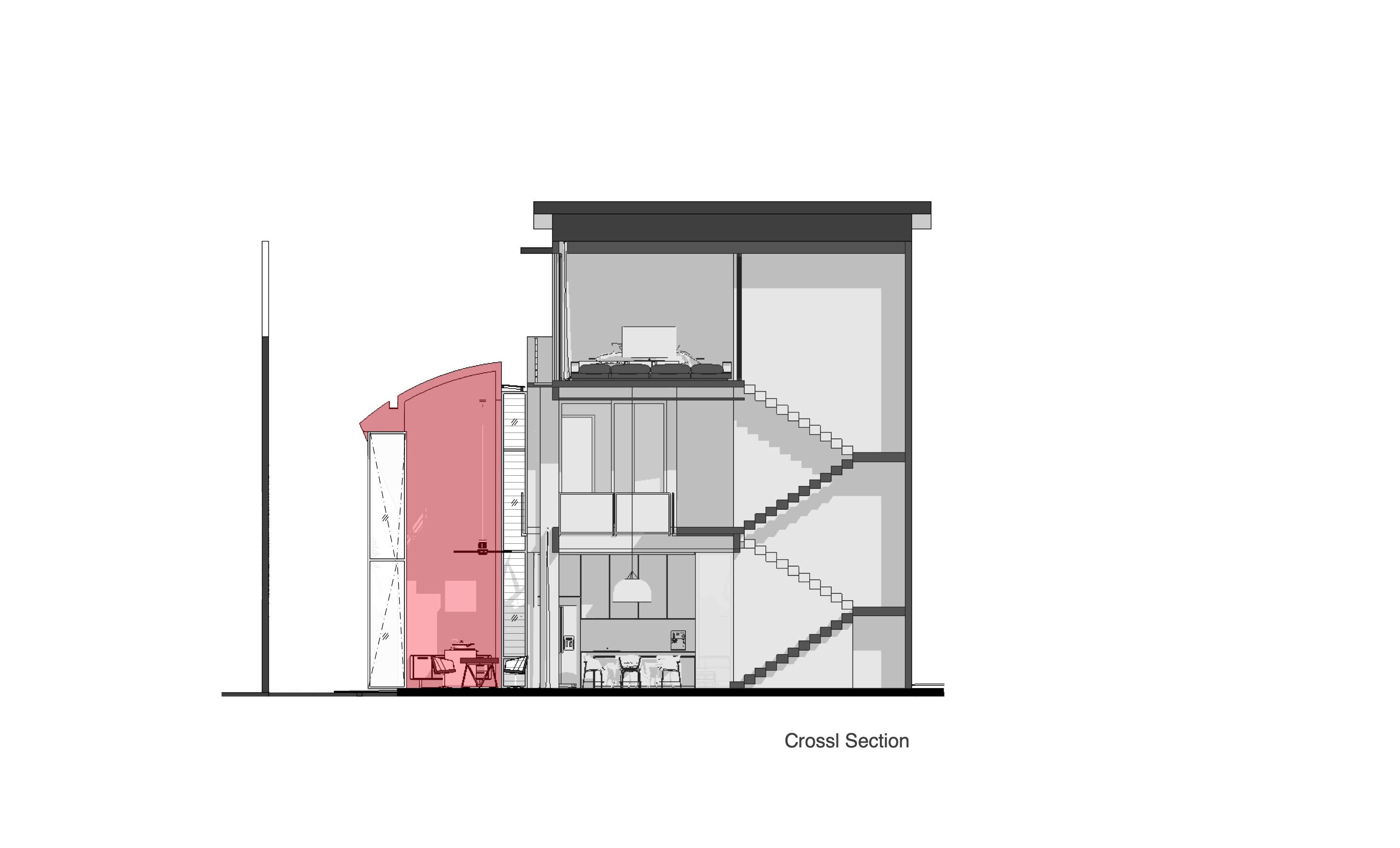
Rather than attaching a conventional extension, Core Design Workshop introduced a new off-form concrete structure positioned deliberately 600 millimetres away from the existing house. This narrow separation forms a glazed and louvred void that functions as a spatial hinge, allowing light, air and movement to pass continuously between old and new. The project’s defining element is therefore not the building itself, but the interface created by proximity without physical attachment.
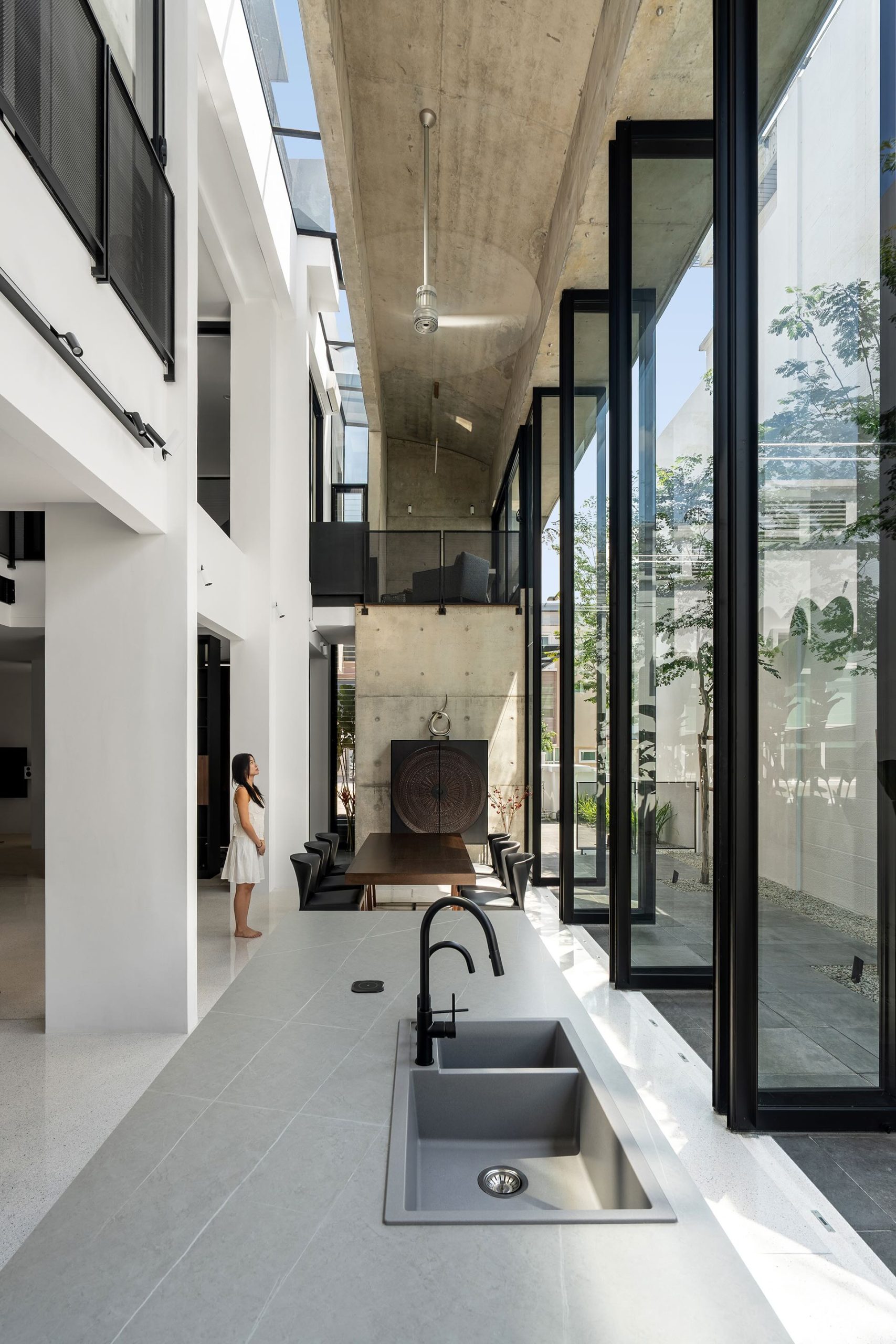
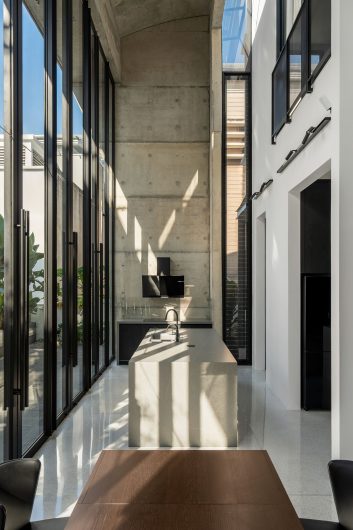
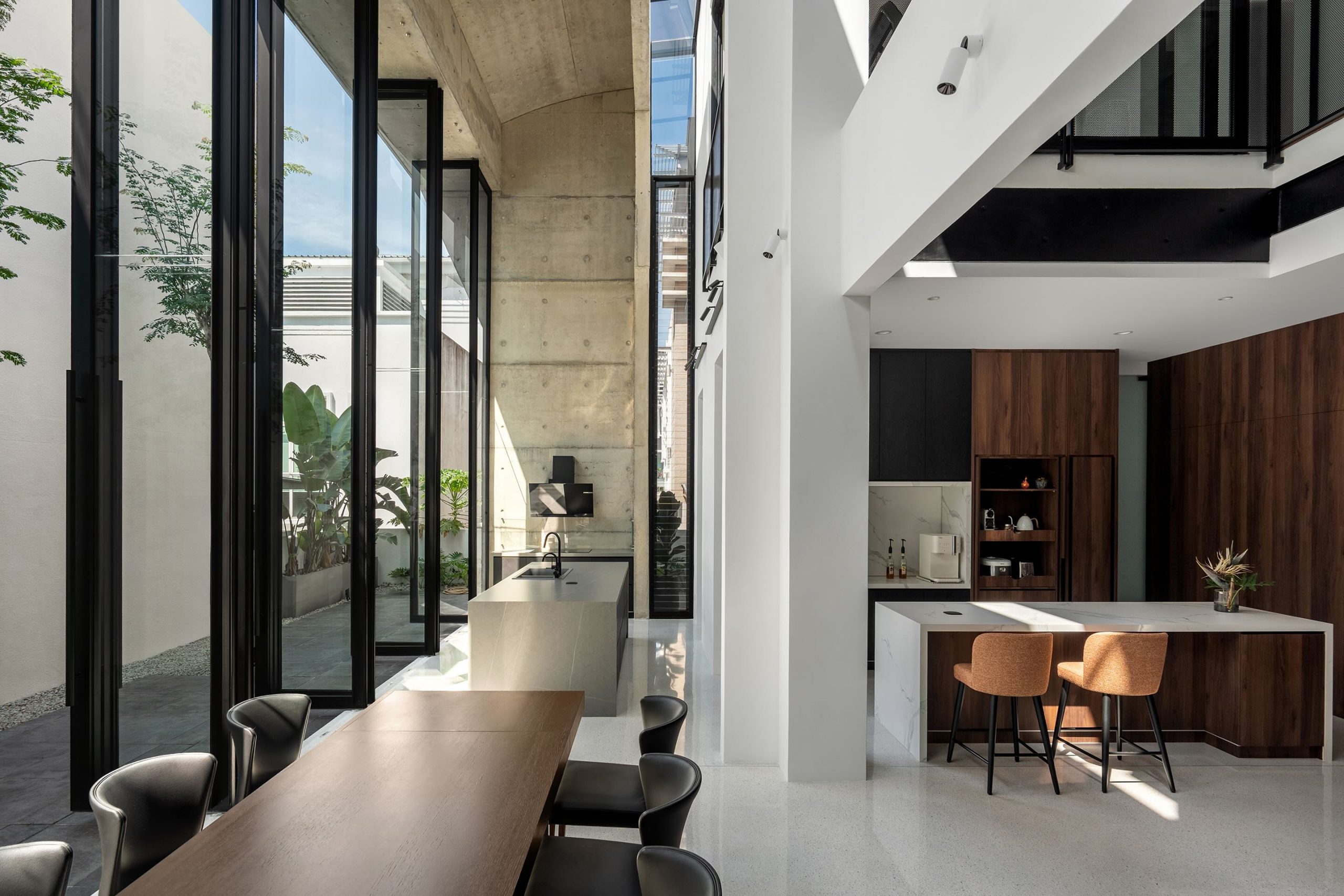
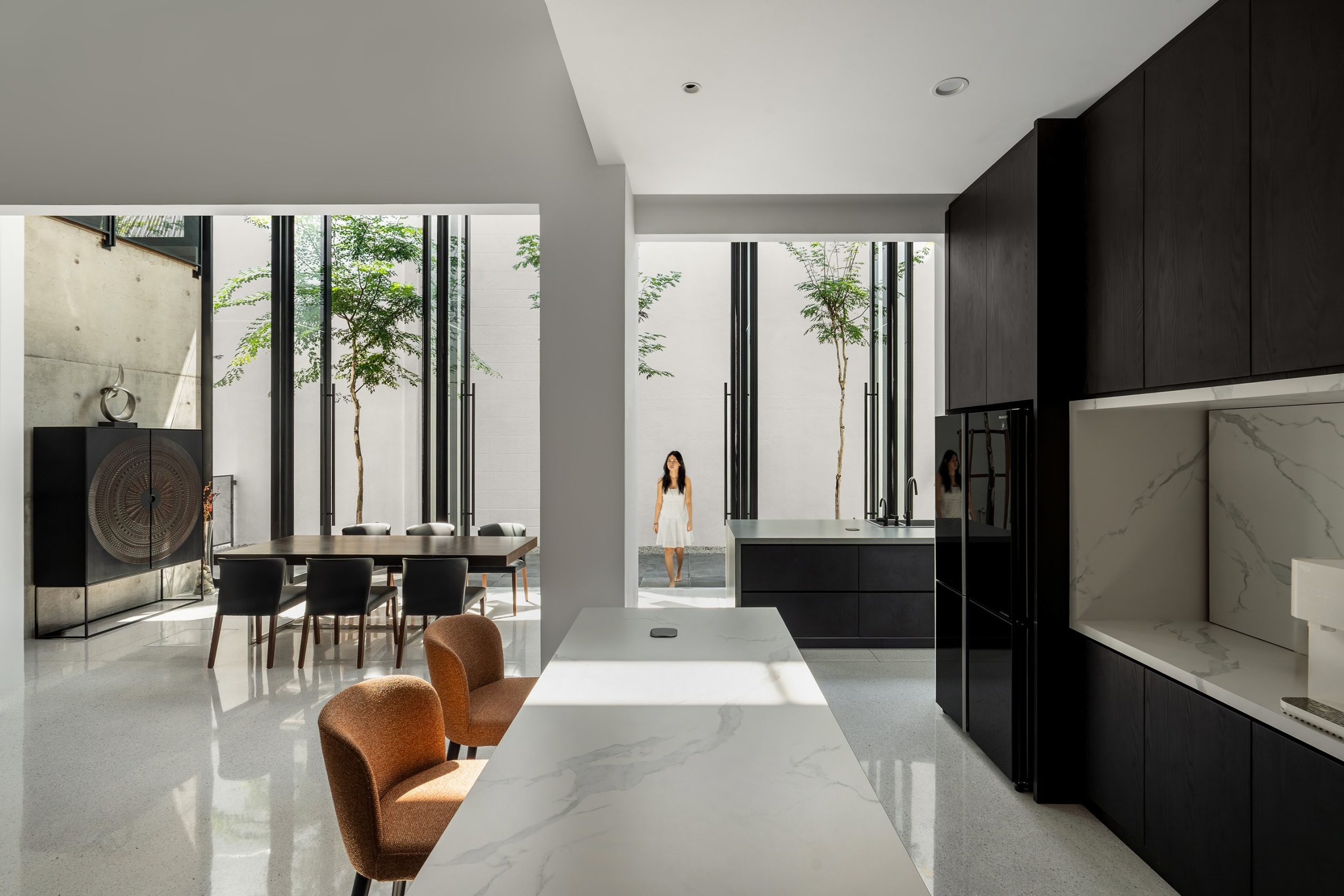
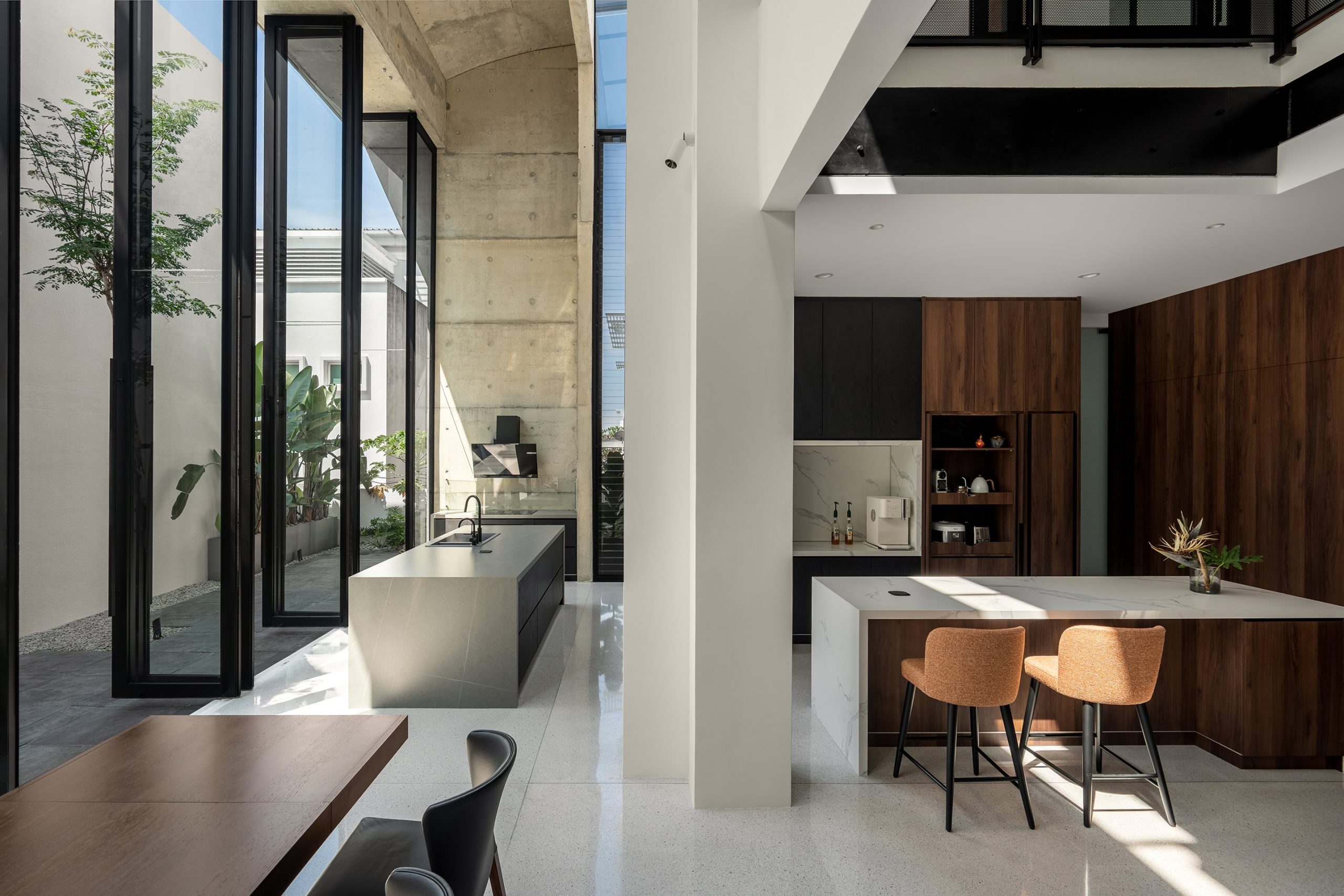
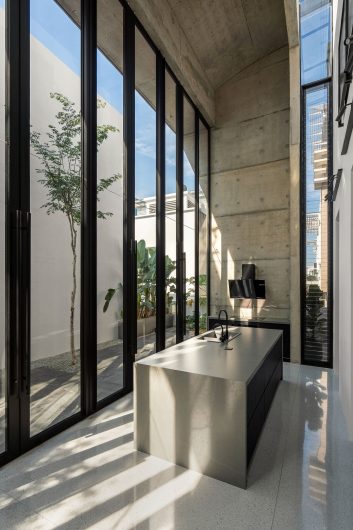
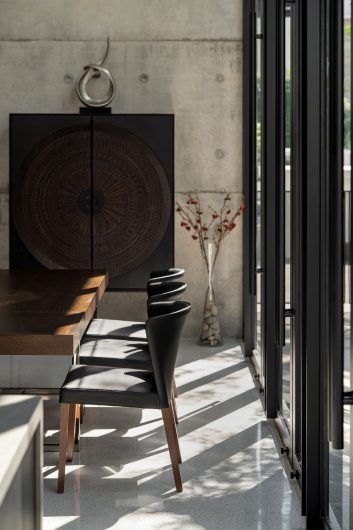
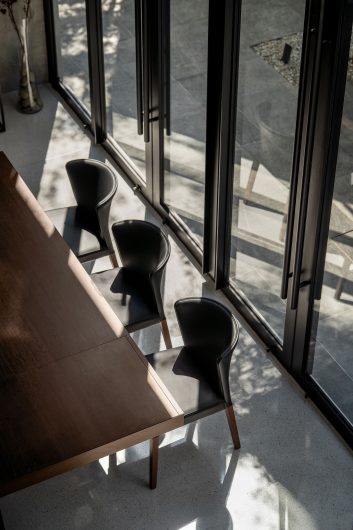
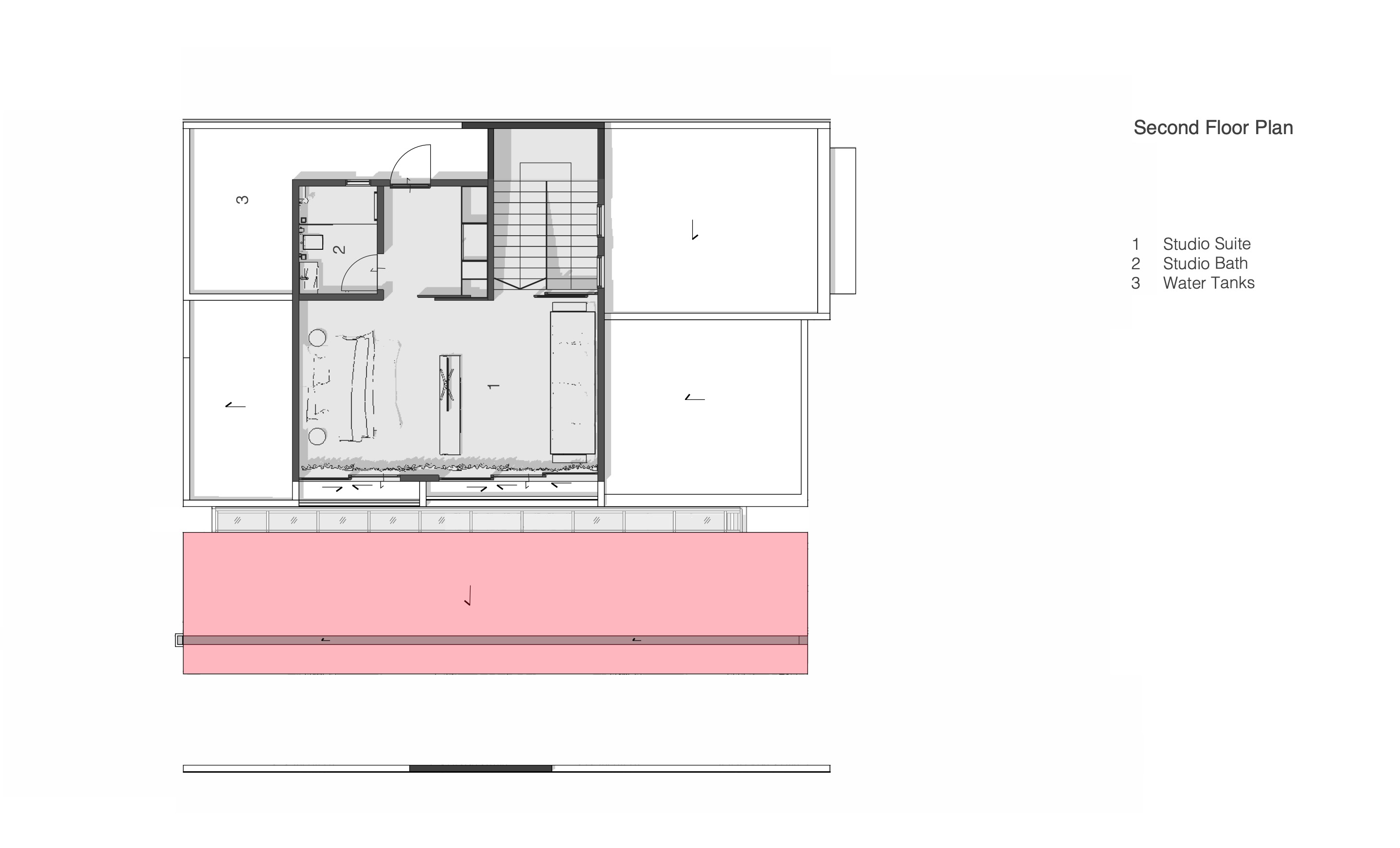
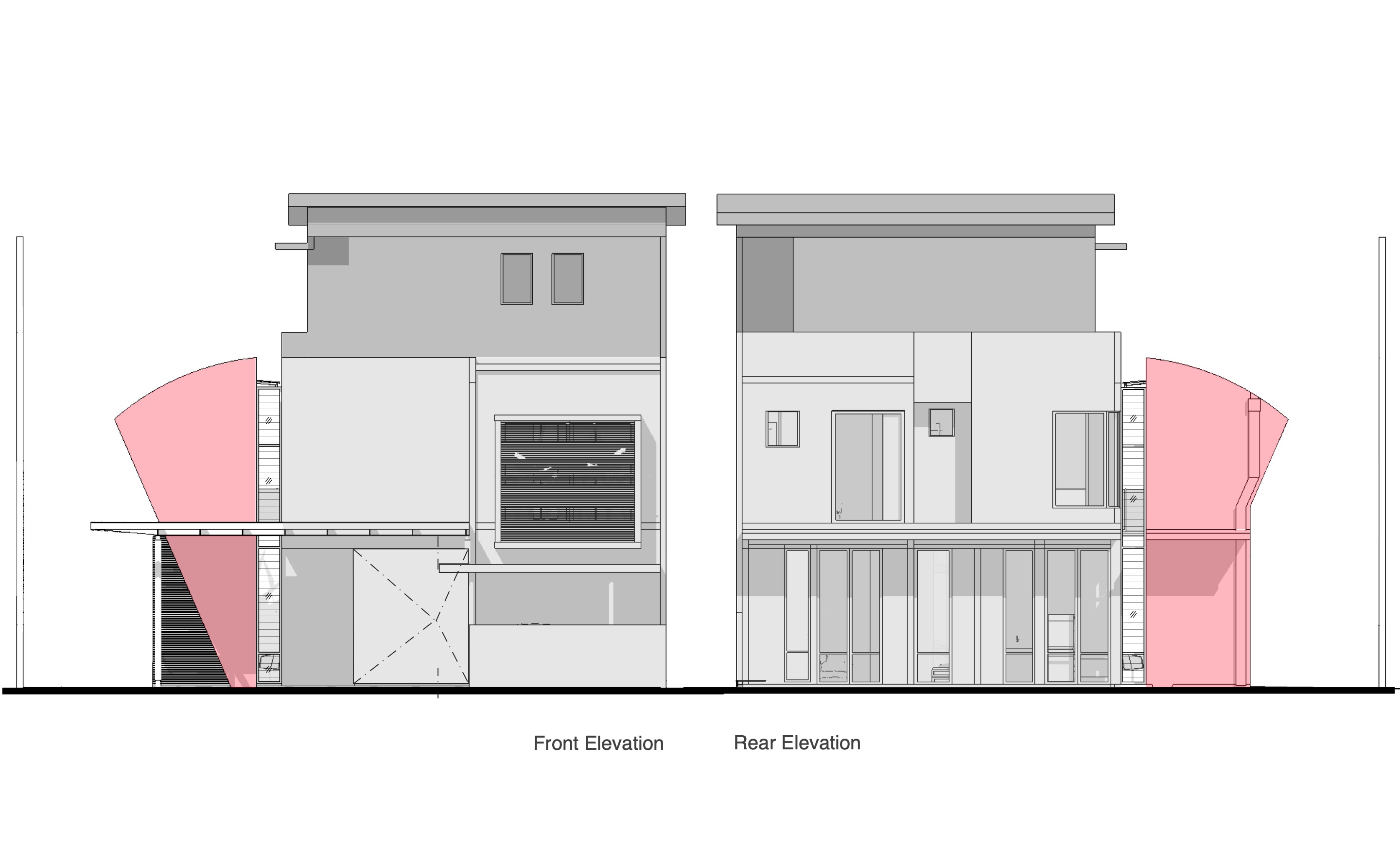
At ground level, a cast in-situ terrazzo floor runs uninterrupted from the original house into the new hall, establishing continuity across the separation. Above, the two structures remain independent. The new concrete roof curves freely, spanning the hall without intermediate support and without relying on the existing building. First explored through paper studies and later realised in concrete, the curved form is a structural response rather than a formal gesture, achieving strength through bending.
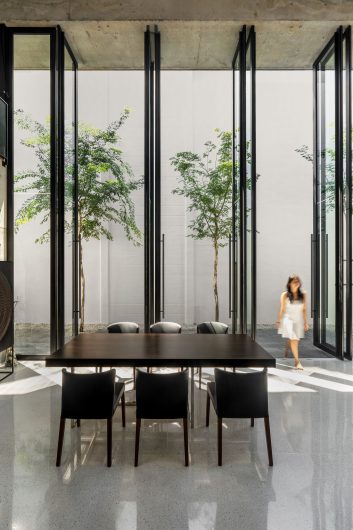
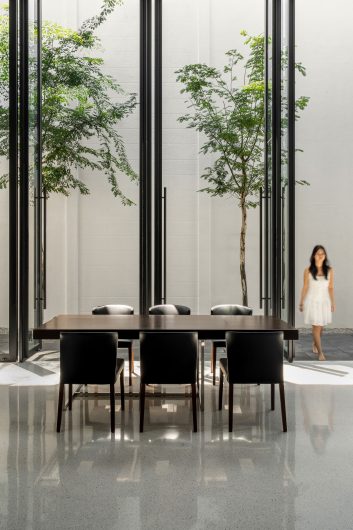
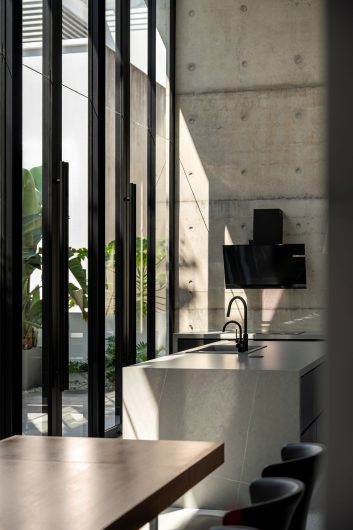
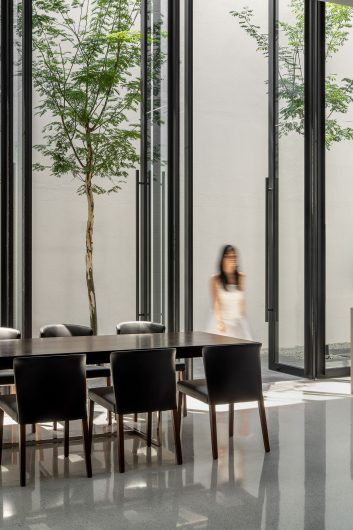
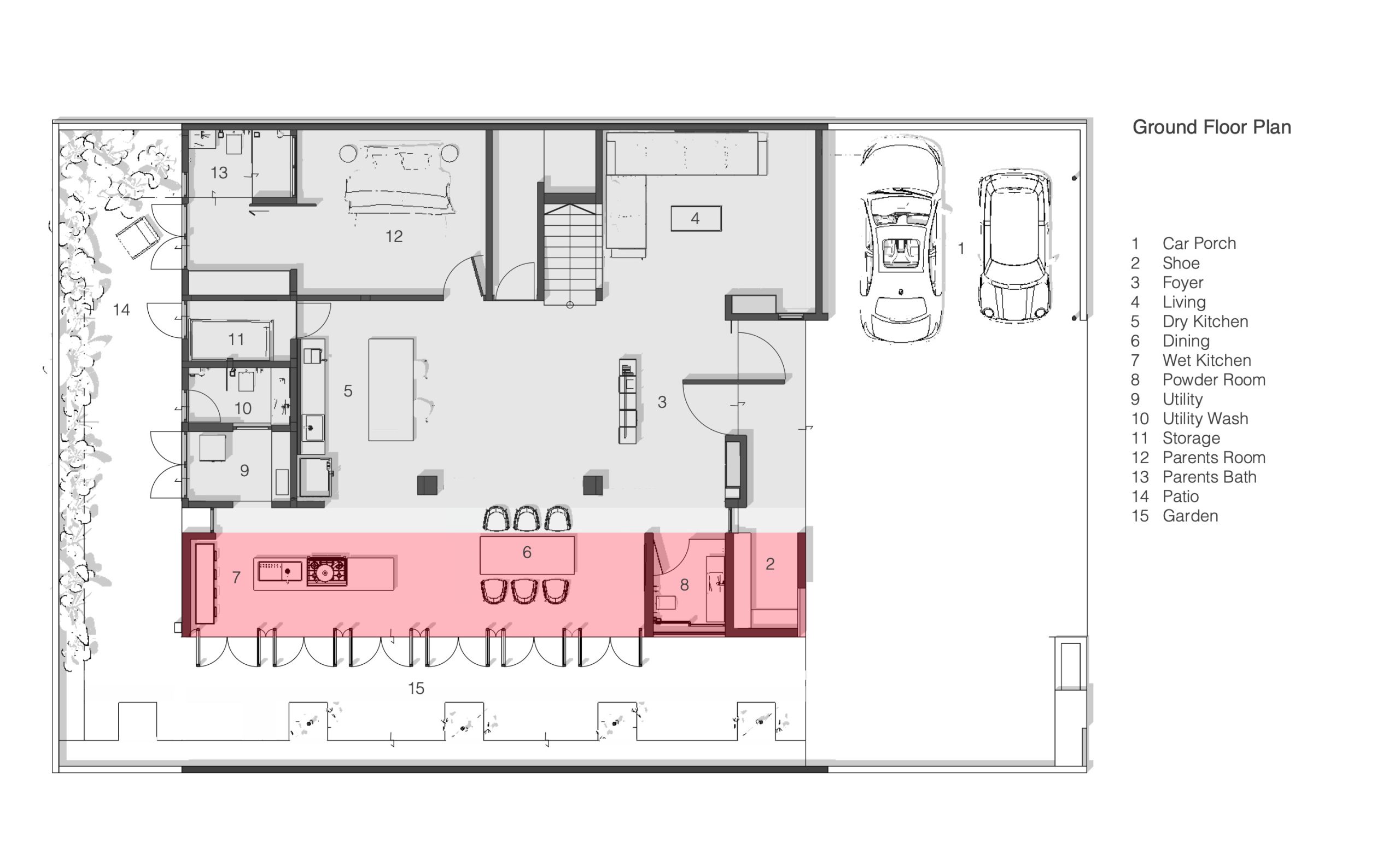
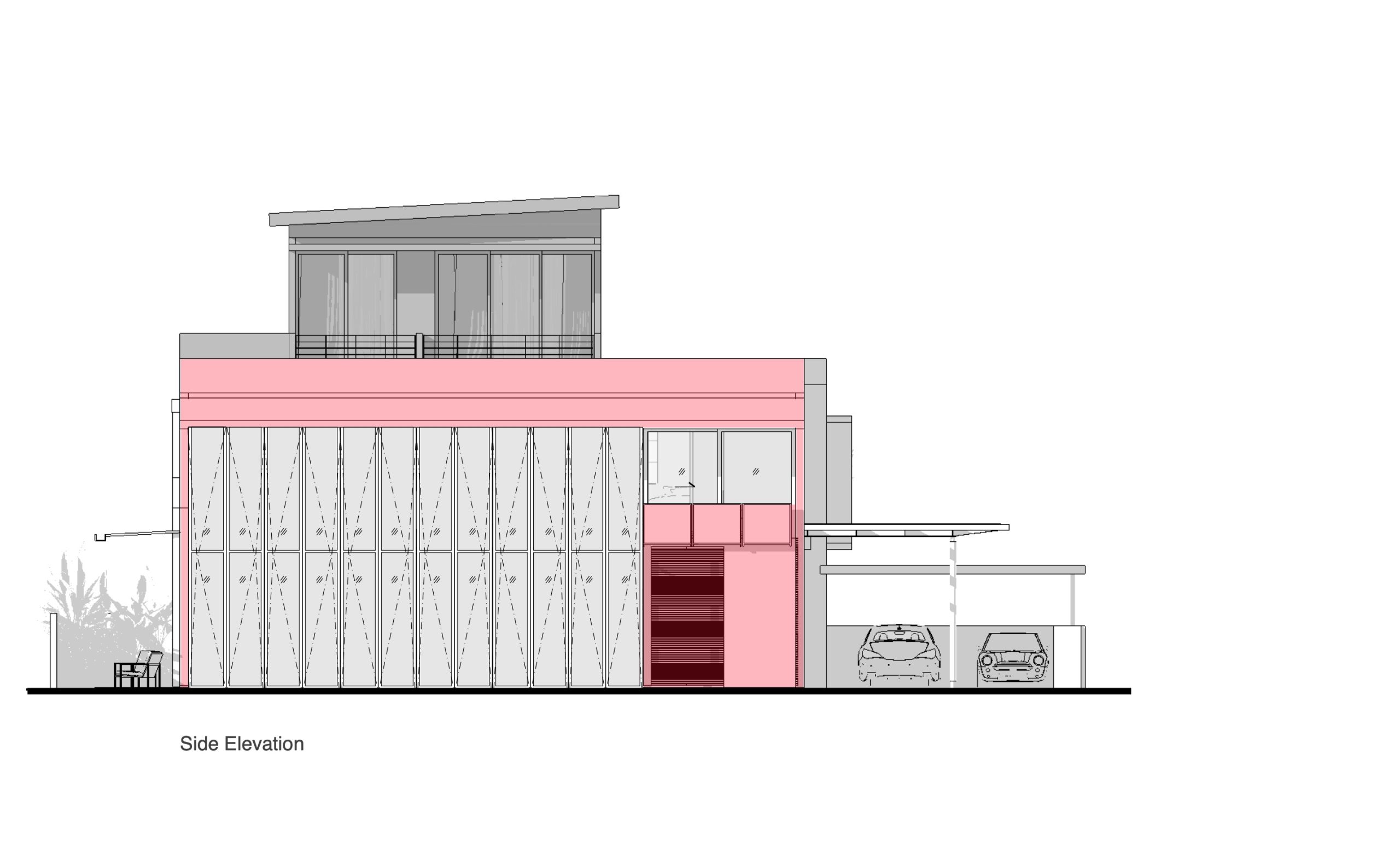
The extension takes the form of a double-height hall that accommodates dining and wet kitchen functions, programs traditionally pushed to the rear of Malaysian houses. Twelve full-height pivoting glass panels line the garden edge, allowing the space to operate across varying degrees of openness. When opened, the hall dissolves into the landscape; when closed, it remains visually continuous while protected from tropical rain. Overlooked by the upper floors, this semi-outdoor hall becomes the social heart of the house.
By positioning the new volume alongside rather than onto the existing bungalow, Interface House resists the logic of seamless extension. Instead, it stages a deliberate negotiation between inherited suburban fabric and a new architectural order, using structure, void and program to question how domestic space can adapt to Malaysia’s hot–humid climate.
Interface House 是位于吉隆坡的一栋住宅改造项目,它重新思考了在开发商建造的零侧边距洋房限制下,如何实现户外生活体验。
Core Design Workshop 没有采用传统的加建方式,而是在距离现有房屋600毫米处,刻意置入了一个新的清水混凝土体块。这道狭窄的缝隙形成了一个装有玻璃和百叶的虚空间,如同一个空间枢纽,让光线、空气和人的活动得以在新旧建筑之间自由穿梭。因此,这个项目的核心定义元素并非建筑本身,而是由这种“相邻而不相连”的关系所创造的“界面”。
在地面层,无缝的水磨石地面从老屋一直延伸至新大厅,在分隔处建立起空间的连续性。而上部的两个结构体则各自保持独立。新的混凝土屋顶以自由曲线形态呈现,无柱地覆盖着大厅空间,且完全不依赖现有建筑承重。这种曲面形式最初通过纸张模型进行推演,最终以混凝土实现;它是一种结构上的理性回应,而非纯粹的形式主义表达,通过弯曲来获得结构强度。
加建部分是一个通高两用的大厅,容纳了用餐和湿厨房功能, 这些 traditionally 被置于马来西亚住宅后部的功能。沿着花园边界,设置了十二扇通高的旋转玻璃门,让空间能够根据需求调整其开放程度。当玻璃门完全打开时,大厅便消融于景观之中;关闭时,空间在保持视觉通透的同时,又能抵御热带风雨。这个半室外大厅被上层空间俯瞰,成为了整栋房子的社交核心。
Interface House 通过将新体量置于既有洋房“旁边”而非“之上”,抵抗了无缝扩建的传统逻辑。相反,它让既有的郊区肌理与新的建筑秩序展开一场审慎的对话,利用结构、空隙和功能排布,来探讨居住空间如何更好地适应马来西亚炎热潮湿的气候。
photographs © Bricksbegin
illustrations © Core Design Workshop
Architectural Design
Core Design Workshop
Architect in Submission
Walless Architects
Main Builder
Sinar Sintetik
Aluminium Doors/ Windows
Infinite Altech Sdn Bhd
Architecture Lighting
Arch Green
completion
2025