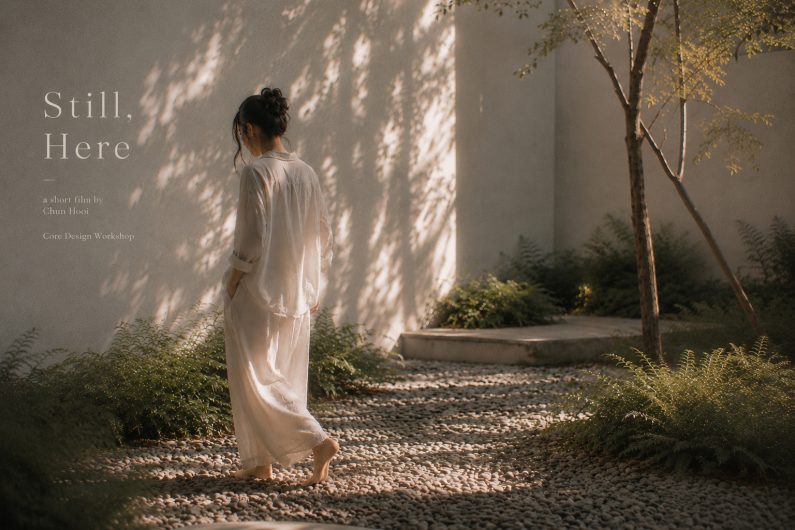

STILL, HERE
a film by Chun Hooi, Tan
STILL, HERE – A Reflection
I began this project thinking I was making a short film.
What followed was something else.
For many years, my creative process followed a familiar pattern. Ideas would begin as intuition, develop through observation, reflection, references and conversation, and eventually find their way into a piece of work. The process was never entirely solitary, yet the thinking largely remained within the boundaries of the self.
Over the last few years, that began to change.
During the development of several projects, I found myself entering into increasingly extended dialogues with artificial intelligence. Not to seek answers, but to explore possibilities. Not to arrive at solutions, but to think through them. Ideas were proposed, challenged, rejected, revisited and transformed through conversation.
At first, I regarded this simply as a new tool.
Over time, I began to suspect that something else was happening.
The making of Still, Here became the first opportunity to explore this situation without the constraints of a client, a budget or a building. There was no brief to satisfy and no outcome to protect. The project existed only as an open inquiry.
What came out of it surprised me.
The completed film is not one I would have made on my own.
It is not a film I had imagined making.
Yet it contains my experiences, my instincts, my decisions and my questions.
Somewhere along the way, the dialogue itself became part of the creative process.
For the first time, I found it difficult to comfortably claim sole authorship over a work that felt deeply personal.
This was not entirely new.
Looking back, traces of this condition had already appeared during earlier architectural projects. The questions, suggestions and exchanges had gradually begun to influence the way ideas developed. Yet architecture still carried the structures of professional responsibility. Clients, drawings, consultants and buildings ultimately required decisions to be made and ownership to be assumed.
The film revealed something architecture had previously allowed me to overlook.
It exposed the dialogue itself.
As creators, we often understand creativity as a process of observation, reflection and making. Yet what happens when reflection itself becomes dialogic? What happens when the creative process no longer unfolds entirely within oneself, but through continuous exchange with something that is not human?
I do not have an answer.
Nor do I know whether this condition improves creativity, diminishes it, or transforms it into something else altogether.
What interests me is not the technology itself, but the shift in the creative process.
The completed film is neither entirely mine nor entirely independent of me. It emerged through a relationship that is difficult to describe using the language of authorship we have inherited.
Perhaps this uncertainty became the true subject of the project.
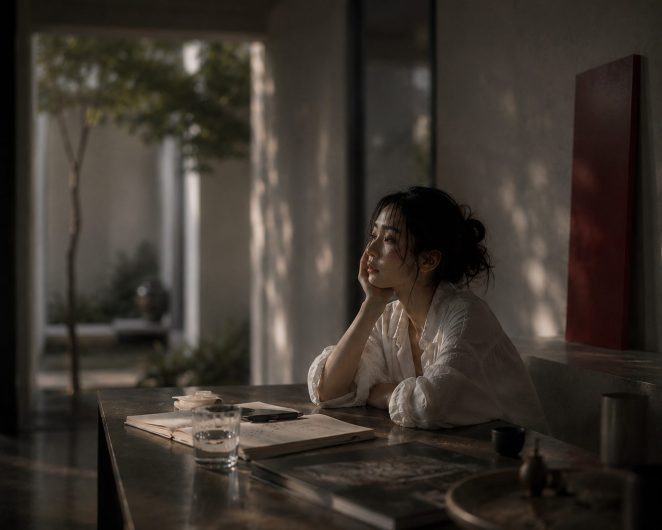
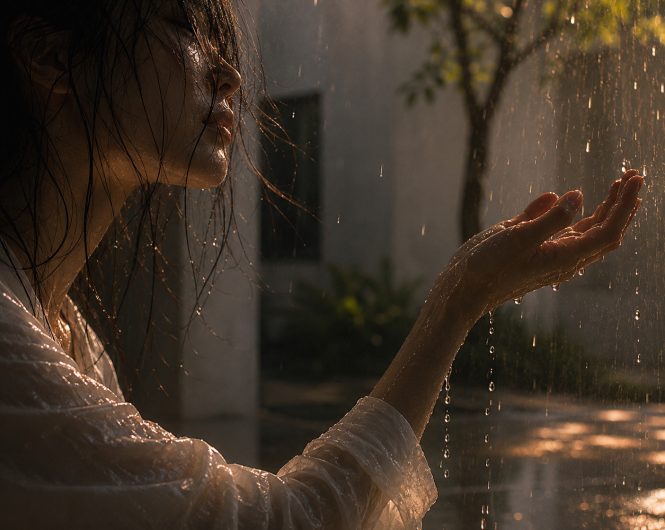
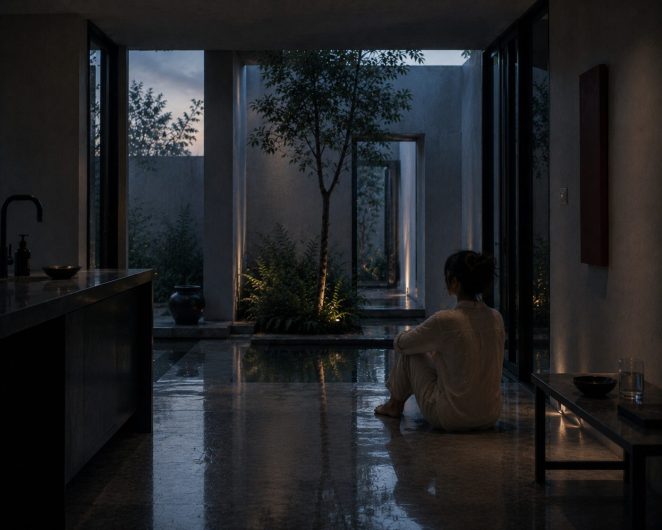
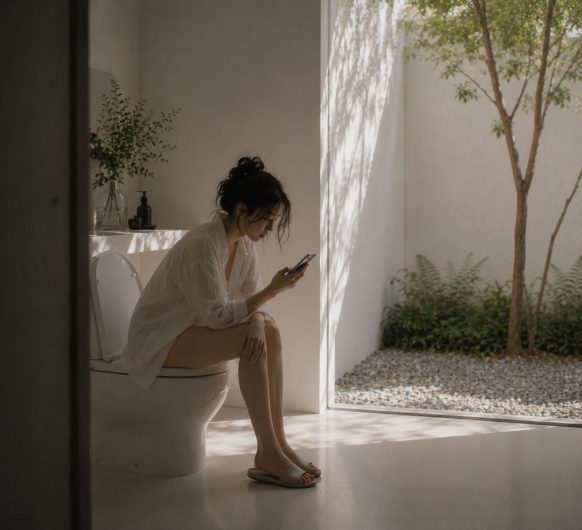
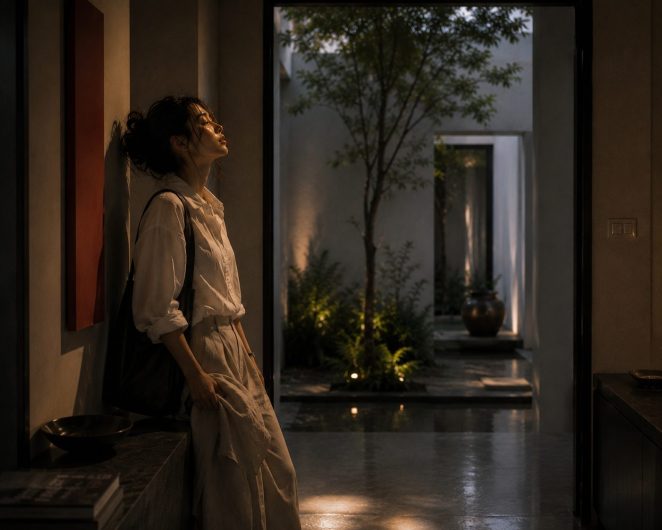
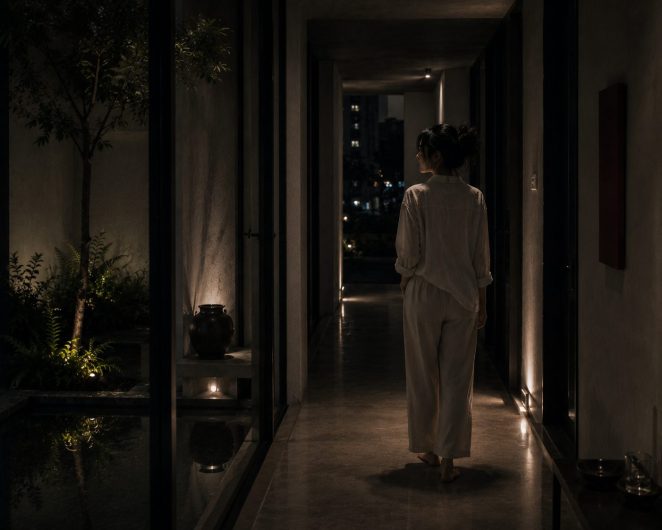
The film follows the quiet rhythms of an ordinary day through a sequence of still images and environmental sounds. There is no plot, no destination and no resolution. Yet in hindsight, the structure mirrors the process that produced it. The film lingers on moments that resist explanation, while the act of making it revealed questions that similarly resist conclusion.
This reflection is not an argument for or against artificial intelligence.
Nor is it an attempt to define what remains human.
Instead, it records a moment of encounter.
A moment in which the boundaries between creator and tool, reflection and dialogue, authorship and collaboration became less certain than before.
Whether this condition proves temporary or becomes a defining characteristic of future creative practice remains unknown.
For now, I can only describe what I experienced.
I thought I was making a film.
Somewhere along the way, it became a question.
— Chun Hooi Tan
2026
《仍在》
一則記錄
起初,我只是想拍一部短片。
後來才發現,真正發生的事情並不在影像之中。
多年來,我一直相信創作始於觀察。觀察一個地方、一段光線、一種情緒,或某些難以言說卻始終存在的感受。那些感受經過時間沉澱,逐漸形成想法,最後成為建築、文字,或某種被看見的形式。
近年來,這個過程開始出現一些變化。
在設計工作的過程裡,我與人工智能展開了越來越長的對話。起初只是討論設計、交換想法、整理思緒。它像一面鏡子,也像一個不知疲倦的對話者,陪伴著思考不斷往前延伸。
我一直把它視為工具。
直到《仍在》的出現。
這部短片沒有委託、沒有預算,也沒有需要被完成的目標。它只是一次開放的探索。我原以為自己正在尋找一種影像語言,卻在過程裡遇見另一個問題。
完成之後,我很難說這是一部完全屬於我的作品。
它來自我的經驗、記憶、判斷與選擇。
但它也不是我獨自會完成的作品。
更準確地說,它誕生於一場持續發生的對話之中。
我開始意識到,或許改變的並不是工具,而是思考本身。
過去,我們習慣把創作理解為一種向內的過程。觀察、反思、想像,再將其轉化為作品。
但當反思不再完全發生於內心,而是在持續的對話之中展開時,創作是否也開始變成另一種狀態?
我不知道。
我也不知道這樣的改變究竟會帶領我們走向何處。
它會讓創作變得更好嗎?
還是更貧乏?
又或者,它只是把我們帶往一種尚未被命名的新處境?
這些問題,我都沒有答案。
而《仍在》也不是為了回答它們而存在。
回頭看,短片裡那些安靜而尋常的片刻 -雨水落下、光影移動、凝視窗外、伸手觸碰流水 – 似乎都在提醒著我一件事:
真正重要的,也許從來不是答案。
而是那些尚未被理解的經驗。
那些仍然停留在我們身上的感受。
那些介於清楚與模糊之間的片刻。
那些仍在發生的提問。
或許,《仍在》最終記錄的並不是一個人的一天。
而是一場相遇。
一次關於創作、關於技術、關於自我,以及關於未來的相遇。
我原以為自己在拍一部短片。
後來,它成了一個問題。
而那個問題,至今仍在。
—— 陳炯暉
2026